Each of us carries a hidden side - what Swiss psychiatrist and psychoanalyst Carl Jung called “the shadow.” These are the parts of ourselves we’ve learned to hide: our anger, fear, shame, and unspoken desires. These unacknowledged parts show up in how we treat ourselves and how we treat others. They also lurk within the systems of violence that pervade our world.
In this six-week course, we will explore how our personal shadow shapes our relationships, our leadership, and our ability to confront evil in the world around us. We will look at how unexamined inner wounds can project outward as conflict, prejudice, and violence, and how healing the inner self can lead to transformation in our shared life.
Drawing on Jungian psychology, spiritual wisdom, and artistic expression, this course invites participants into a courageous journey inward and outward. We will reflect on where our masks have protected us, where they have limited us, and how we can grow toward deeper honesty, humility, and freedom.
Course Goals
- Learn what the "shadow" is and how it develops in our early life
- Understand how unacknowledged inner dynamics fuel judgment, projection, and cycles of harm in personal and public life
- Begin the work of identifying and engaging your personal shadow without shame or fear
- Explore the concept of evil not only as an external force but as a form of collective unhealed energy
- Develop practices for integrating shadow awareness into daily life, relationships, and community leadership
- Create space for honesty, healing, and spiritual reflection within a supportive learning community
Course Invitations
- Weekly participation in a two-hour Zoom course
- Read weekly assignment (approx. 20–40 pages, or equivalent media) and write a short response on course discussion board (approx. 250 words)
- Engage with classmates’ reflections on Pathwright
- Complete a final public-facing project related to the course topic (e.g., sermon, op-ed, podcast, liturgy, public action)
Final Project
Each student is invited to complete a project that puts their learnings from the course into practice. This project can take a variety of forms (e.g. a sermon; a prayer, litany, liturgy; a personal reflection, a piece of art, etc.). The critical factor is that it is authentic to you and your context, and the invitation is to put it out into the world by preaching the sermon, praying the prayer in a service, or completing the proposed project.
Course Structure
This course with Episcopal Divinity School is being offered on a pay-what-you-can basis and we’re anticipating that we’ll exceed the course cap of 30 students quickly. Enrollment will be via a lottery system. If you are selected to take the course, you will receive an email notification inviting you to complete your registration after the registration window closes.
This course is not for credit and students do not need to be enrolled in an educational institution in order to register. EDS courses are designed for learners who are ready to commit to the course invitations, as stated above.
The pay-what-you-can tiers are $300 / $150 / $75 and financial aid available if you are selected for the course and unable to pay.
Course Outline
Thursday, October 16 - Unpacking and Repacking the Knapsack for This Journey: An Exploration of the Shadow and Its Gifts and Challenges
Unfortunately, the shadow is not engaged enough in the ways that could enlarge and enrich the human pilgrimage on the earth, because of its nature and the mystery surrounding it. Our pilgrimage over the next weeks will explore that richness. Among the questions that we will ponder are the following: What is the shadow? What does it have to do with daily living? How is it empowered?
Thursday, October 23 - Excuse Me, I Was Not Planning For The Other One To Meet You: Exploring The Disowned Body
No matter how beautiful our psychological clothing (personas) may be, the shadow is always close by, and the effort to disown the energy it creates causes much upheaval in the human psyche and in the human community. What is the dance that the shadow requires? How do we come to have disowned bodies, and what can be done about that situation?
Thursday, October 30 - Work and Spirituality Should Be Sufficient: Exploring the Shadow Side of Work, Spirituality, and Religion
The ego is a trickster and supports the cultural notion that work, and achievement should be sufficient for the life journey. But burnout, physical and mental illness bear witness to the insufficiency of work and achievement to nourish the human soul and guard against workaholism. How does spirituality support a healthy attitude toward work and achievement?
Thursday, November 6 - We Don’t Think Much About That Kind of Thing: A Psychology of Evil and Enemy Making
Since human beings arrived on the planet, there has been an energy that is deeply ingrained in much of their interaction with one another,, which has led to creating the dynamic of “us and them.” It is often very hard to understand it and it is even harder to navigate it in daily living, both in individual daily life as well as in community. How much of this energy belongs to the individual and how much to the collective? What is the best way to engage it? What are the tools, if any, that can be of assistance? Where can one find the tools?
Thursday, November 13 - The Night Can Be Long: But Light Comes Through Dreams, Stories, Therapy
The dark night of the soul can manifest itself in many ways and lead one to the conclusion that morning will never come, but dreams, stories and good psychotherapy are able to find the smallest open spaces in the human psyche to enter in ways that will begin the path to consciousness. How can an individual find the courage and energy to explore dreams, stories and pursue awakening through therapy?
Thursday, November 20 - Claiming All There Is To Claim: Negative, Positive, Challenges, Gifts, and All That This One Wild Life Has To Offer
The process of claiming all the aspects of one’s shadow is much like making a quilt from a variety of scraps that have been retrieved from worn out garments that can no longer be used as they were but continue to have small usable parts. Thus, the quilter keeps a rag sack to hold those pieces until a new quilt will be made as the human psyche holds all of the unknowns until they are made conscious and brought out of the shadow. How does a person learn to see life as a quilt making process where all experience is appreciated?
Registration for this course was open through September 29 and is now closed. Enrollment will be via a lottery system. Consider joining us in November for an EDS Colloquium with Dr. Fanny Brewster and Dr. Catherine Meeks. Learn more about the colloquium
-
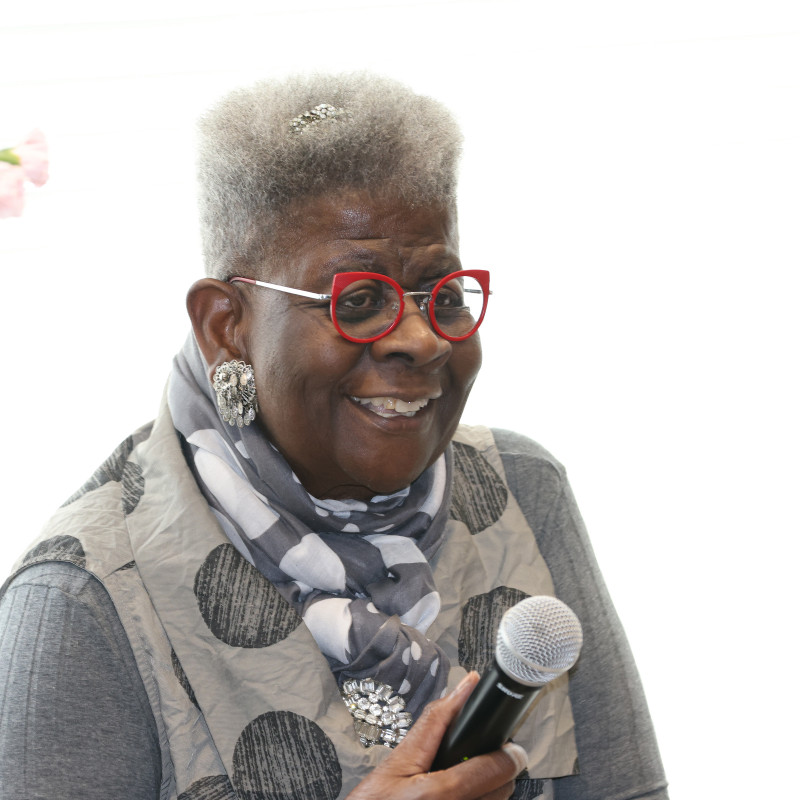
Dr. Catherine Meeks
Dr. Catherine Meeks blends scholarly excellence with heartfelt activism, shaping her as a distinguished voice in socio-cultural studies and a beacon for community transformation. She spent 25 years at Mercer University chairing the African American Studies Program and 9 years at Wesleyan College as the Clara Carter Acree Distinguished Professor of Socio-Cultural Studies.
Dr. Meeks' educational journey, enriched by degrees from Pepperdine University, Atlanta University, and Emory University, reflects her dedication to the life of the mind through the intertwining of her scholarship with Jungian psychology, African and African American Women's Literature.
In her past role as the Founding Executive Director of the Absalom Jones Episcopal Center for Racial Healing, Dr. Meeks orchestrated spiritual retreats and workshops, engaging communities in the vital work of addressing oppression.
Dr. Meeks' profound community impact is recognized by the President Joseph R. Biden Lifetime Achievement and Service Award and her distinction as one of Georgia Trend Magazine's notable women.
Dr. Meeks’ expression of her commitment to wellness and freedom is captured in her current work as Founding Executive Director and Chief Midwife of the Turquoise and Lavender Institute for Transformation and Healing.