Dear EDS Community,
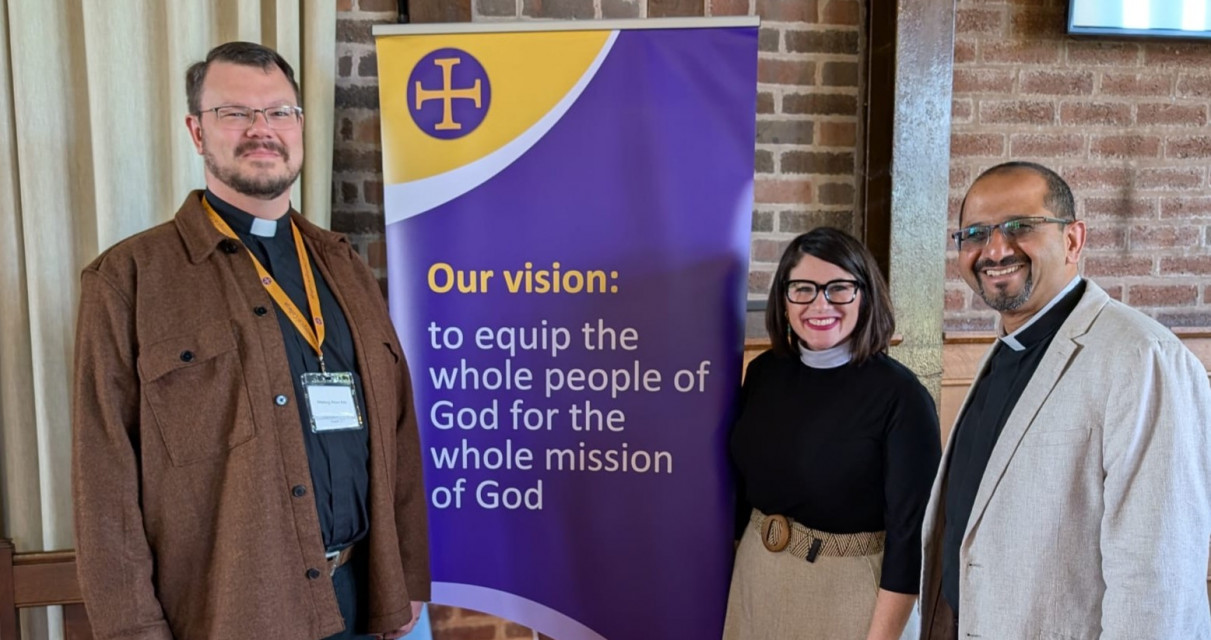
Last week, I traveled to the village of Swanwick in the UK to join seminarians from Emmanuel Theological College (ETC) for the first half of their residential intensive week. It was a joy to witness their unique model of theological education, which combines local learning with focused residential gatherings. My thanks go to my friend and colleague, the Rev. Shemil Mathew, Vice Dean, for the invitation. I also offer my warmest congratulations to ETC’s founding Dean, the Rt. Rev. Dr. Michael Leyden, who was ordained this past week as Bishop of Penrith. Please join me in praying for Michael, Shemil, and our siblings at ETC during this season of transition and opportunity.
“Choseness” as a Responsibility
In my lecture at Swanwick, “Moral Courage in Trying Times: A U.S. Perspective,” I reflected on our moral identity as God’s “chosen people” as described in 1 Peter 2:9:
“You are a chosen people, a royal priesthood, a holy nation, God’s special possession, that you may declare the praises of him who called you out of darkness into his wonderful light.”
I challenged the ways this concept has been co-opted by empire and White Christian Nationalism to imply superiority. When read through a liberation lens, we see this was written to a vulnerable community on the margins during Roman persecution. In this light, “chosenness” transforms from a posture of supremacy into a responsibility. It is not a reward for merit, but a call to mission—one that finds its strength in the margins with Jesus’ liberating love as its cornerstone. By answering this call together as a community, we find our moral courage strengthened. We will need that strength in the long work of bending the arc of our universe more towards justice.
It was a gift at the conclusion of my lecture to invite the seminarians to reflect and share on what moral courage looks like in their own contexts and to hear so clearly their deep love for Jesus and their communities. Issues like poverty, oppression, and racism hit home for all of us across the world, and the student body at ETC is committed to standing with those on the margins as a call to ministry.
From Church-Shaped Mission to Mission-Shaped Church
My reflections during this visit were deeply influenced by the missional theology of my former EDS professor, the Rev. Dr. Christopher Duraisingh. In his 2010 article in Anglican Theological Review, “From Church-Shaped Mission to Mission-Shaped Church,” he argues that, for too long, we have practiced a “church-shaped mission” whereby “mission” is just another function of the church designed to bring people into the established, traditional institution. This approach is rooted in the colonial history of our Communion, and Duraisingh lived into the legacy of EDS when he argued that “Mission is not a function of the church, but rather, the church is a function in the already up-and-running mission of God in the world.”
As God’s royal priesthood, it is our responsibility to seek where God’s mission is already alive in our world and, when we find it, to listen, honor, and celebrate.
Meetings & Highlights of the Trip
- I shared a meal with the Rt. Rev. Dr. Anderson Jeremiah and the Rev. Dr. Rebecca Aechtner, both of whom continue to be leading voices on reparations, anti-racism, and gender justice in the Church of England and across the UK. We are committed to partnering around justice issues and public witness across the Communion.
- I was welcomed to the headquarters of USPG - Partners in Global Mission by the Rev. Davidson Solanki, Senior Regional Manager for Asia and the Middle East, and Ms. Nadia Sanchez, Regional Programme Coordinator in Asia, Middle East, Europe and Oceania, to discuss an upcoming gathering of seminaries across Asia in June in Jakarta, to which they invited my participation.
- I spent meaningful time with EDS alum Bishop Peter Selby ’66, whose lifelong ministry in support of women's leadership and LGBTQ+ inclusion in the Church of England was inspired by his time on our campus.
- I met with Bishop Rob Wickham, Chief Executive of the Church Urban Fund, to learn how they support local congregations in eliminating poverty through Asset-Based Community Development.
- In Manchester, I was welcomed to Bishopscourt by Bishop David Walker, a leader in the ethical investment movement and chair of USPG. Bishop Walker and I met at the USPG Triennial Gathering in Manila, and his leadership in the Church of England's reparations movement was also discussed.
Across the globe, faith leaders in our Communion and beyond are wrestling with the urgent questions of moral courage - how to address the harms of injustice in our local communities; how to reclaim our Christian faith from those who co-opt and corrupt it; how to nudge our world closer to God’s dream for all of God’s beloved, including all of creation. In these trying times, I look forward to sharing and learning alongside a global community, as we deepen our fruitful partnerships and live into our shared responsibilities as a royal priesthood.
With hope,
The Very Rev. Lydia Kelsey Bucklin
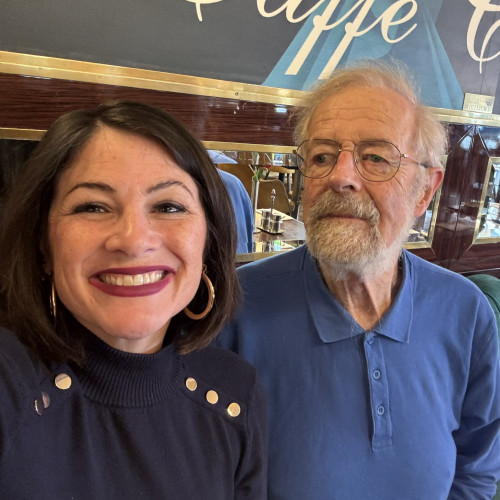 President Bucklin with Bishop Peter Selby ’66
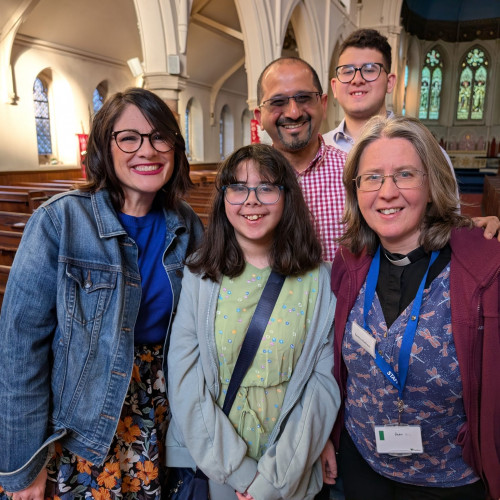 President Bucklin with the Rev. Shemil Mathew, his wife, the Rev. Becky Mathew, and their children
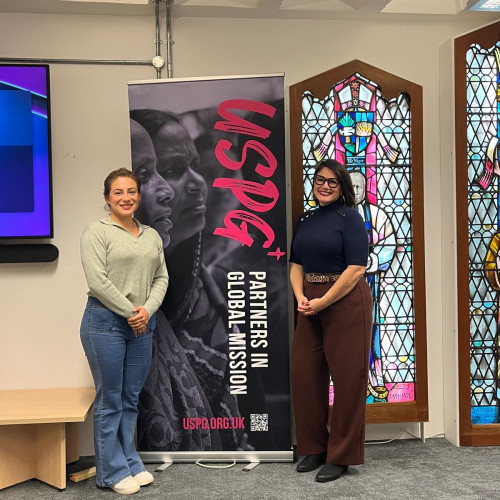 President Bucklin with Ms. Nadia Sanchez at the USPG headquarters
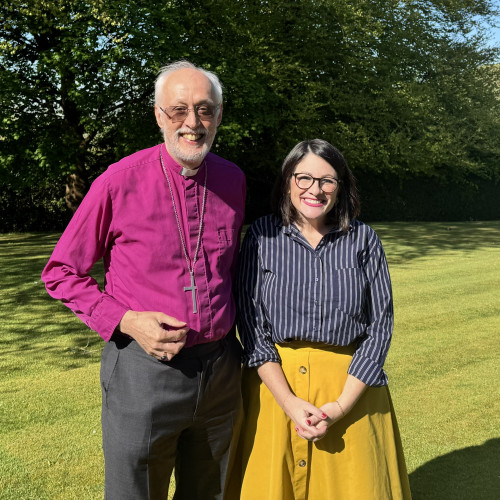 President Bucklin and Bishop David Walker