By the Very Rev. Lydia Kelsey Bucklin
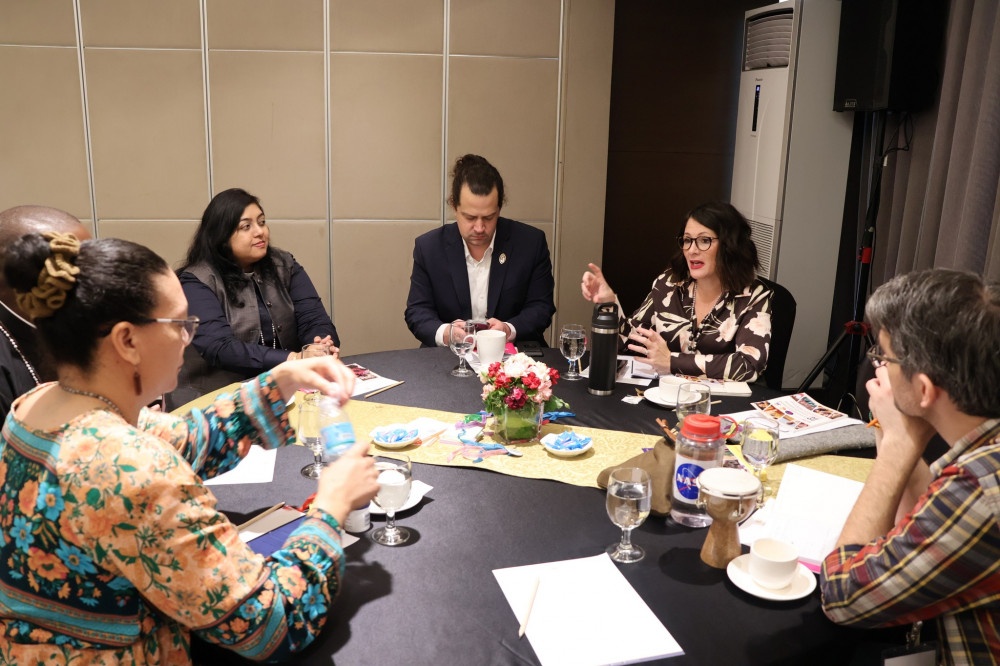
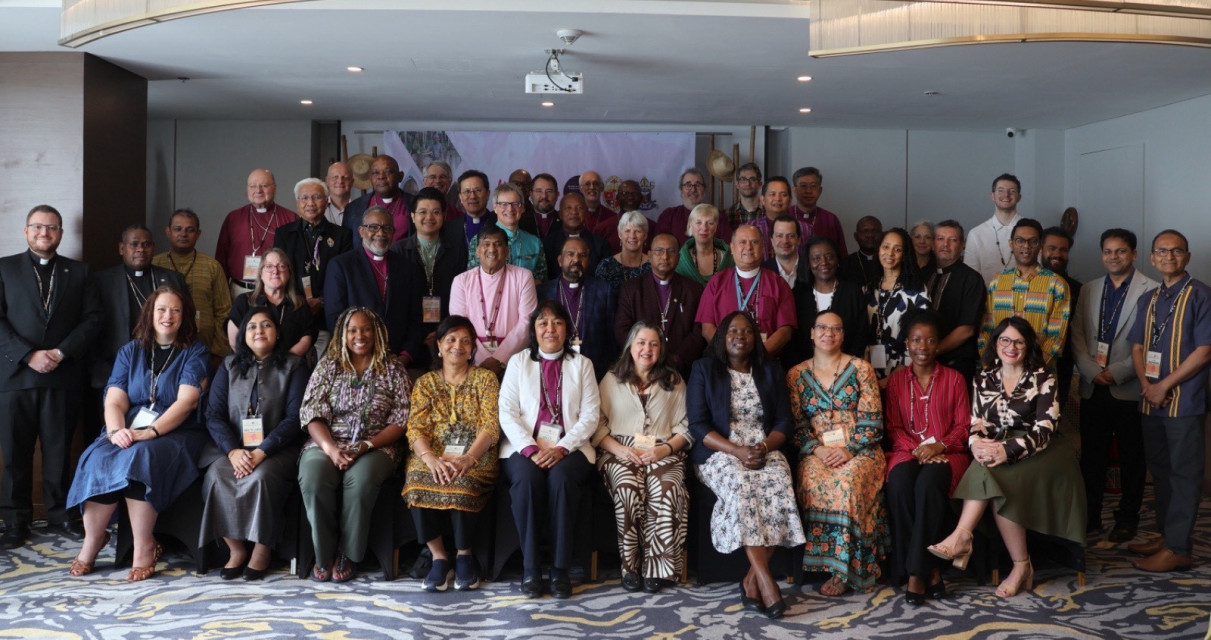
From February 9-13, I had the profound privilege of joining forty Anglican leaders from 31 countries in Manila for the fifth USPG International Consultation. We met under the theme “Breaking the Chains of Injustice: Reimagining Missional Theologies Today,” a gathering that culminated in a jointly signed communiqué calling the global Church to discern how our histories are entangled with questions of land, language, and legacy.
As stated in the communiqué,
“Our experience in the Philippines taught us that reimagining our mission theologies involves aligning our wills and ways to God’s own beating heart for the world, not just through our words but our actions.”
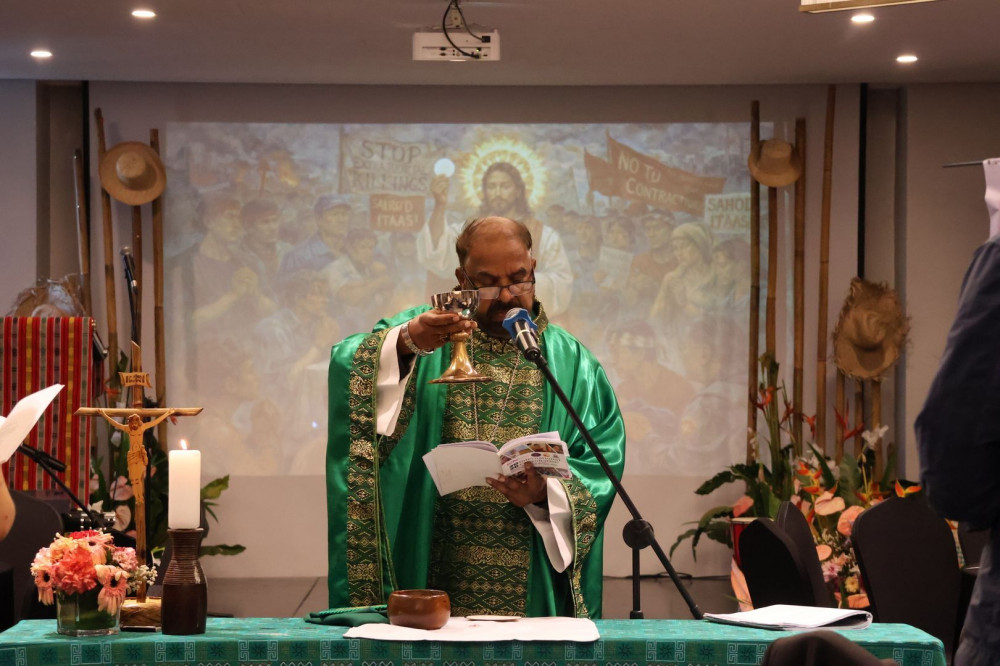
This historic gathering provided an opportunity for primates, bishops, and leaders from diverse contexts around the world to share their local realities, both challenges and hopes, in a collaborative, communal space steeped in beautiful, inspiring liturgy and music often led by local seminarians. I was especially grateful for the profound sense of mutual respect and care fostered by USPG leadership.
As General Secretary of USPG, the Rev. Cn. Dr. Duncan Dormor, noted,
“At a time of significant change in the global order, it was a huge privilege to be with leaders from across the Communion reflecting theologically on the ways in which identity and culture have been deeply shaped by injustices... In outlining a critical role for the Church today, it was inspiring to see so many primates and other leaders from such different contexts and cultures express their unity and solidarity throughout the Consultation and in the bold commitments of this communiqué.”
Disrupting the Comfort of Wealth and Privilege
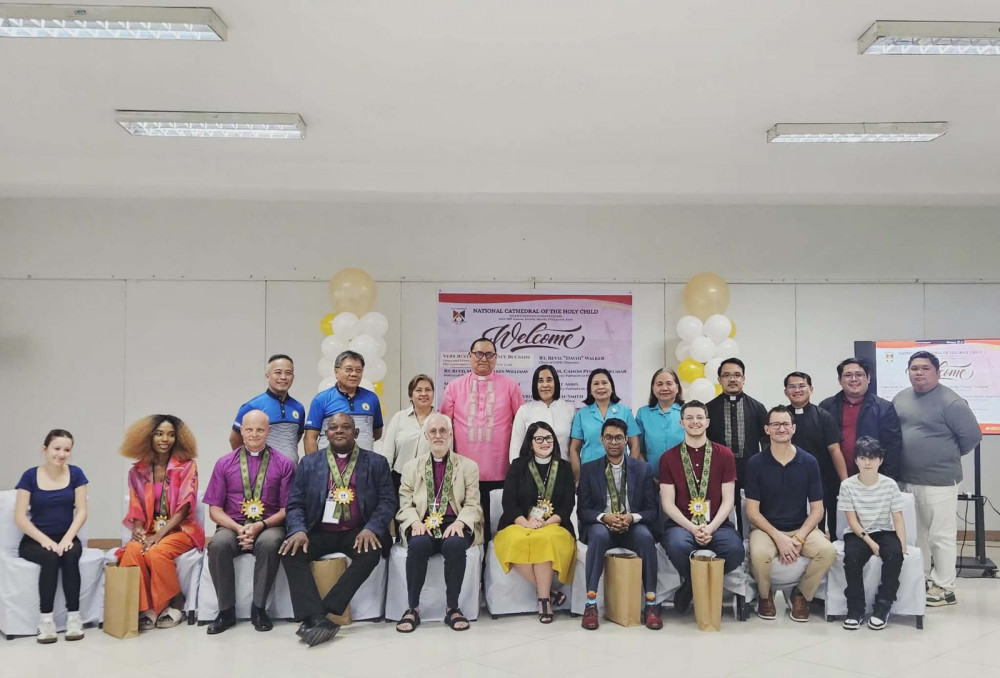
Our experience together was especially formed by the legacy and leadership of local co-hosts, The Episcopal Church in the Philippines (ECP) and the Iglesia Filipina Independiente (IFI). These two denominations, who have been in full communion since 1997, model how ecumenical partnerships strengthen possibilities in commitments to social justice, advocacy, and theological education. One of the quotes that guided much of our work together came from the martyred Iglesia Filipina Independiente (IFI) Bishop Alberto Ramento:
“A faith that does not disturb injustice is no faith at all.”
Meeting and worshiping with leaders from the ECP and the IFI was a transformative experience. These faith leaders from the Philippines, as well as so many of the bishops and leaders who gathered for this consultation, put their lives on the line every day, calling out corruption and advocating for the rights of all. This is not ideological virtue signaling or abstract theological discourse; it is a way of following Christ every day.A constant theme throughout our time was the role of the church in the midst of unjust systems. Many gathered were curious to hear the perspective of a United States citizen when our country and leadership are constantly in the news, increasingly depicted as a colonial force with the rest of the world as its playground. I found myself wondering what courageous, disruptive faith looks like from within the comfort and privilege of the Episcopal tradition in the United States. How do those of us in the church with economic privilege preach and teach solidarity with the poor when our own faith tradition has historically been steeped in wealth and comfort, too often focused inward rather than outward? I thank God for my mentors and teachers at Episcopal Divinity School, including Dr. Kwok Pui Lan, Dr. Fredrica Harris Thompsett, and the Rev. Dr. Kelly Brown Douglas, who consistently remind us that when our theological lens is too narrow, many of God’s people and our shared earth are excluded.
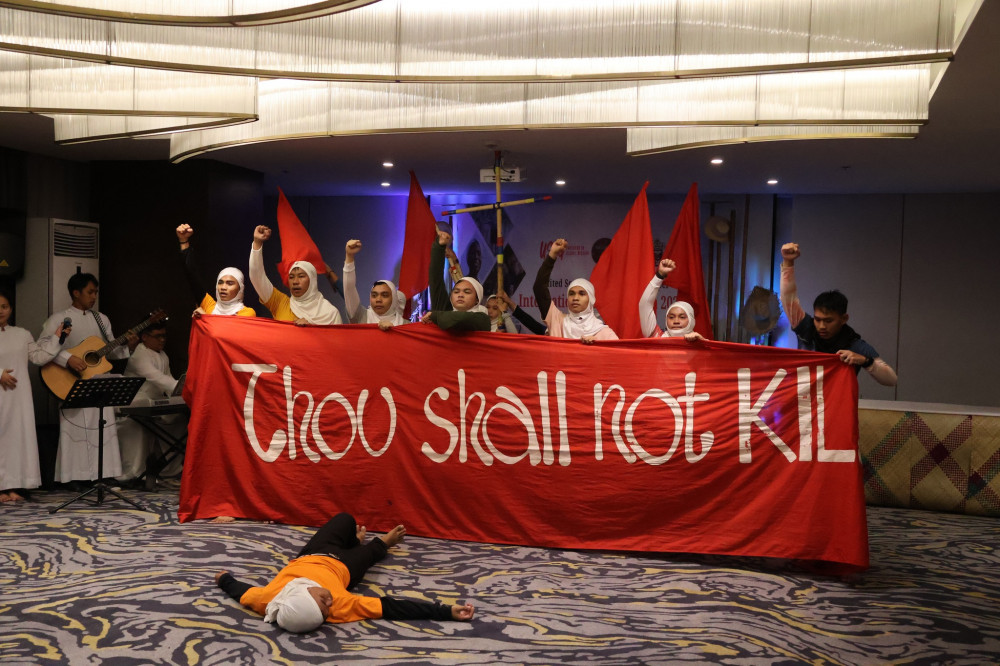
God calls us out of false comfort and into a more expansive love. Realizing God’s dream requires us to tell the truth about our colonial legacy and its lingering impact that continues to benefit those with privilege and power while perpetuating poverty and vulnerability in the US and around the globe.Telling the truth is, of course, only part of the work we are called into, which also includes repair and healing in order that we might embody God’s dream for us, which is one of beauty, diversity, and the thriving of all of God’s creation.
Lessons from Tondo: Moving Beyond "Expendability" to Communion
During the consultation, we reflected on "injustice in terms of estrangement"—the idea that our tolerance for injustice is actually a forced displacement from our own humanity.
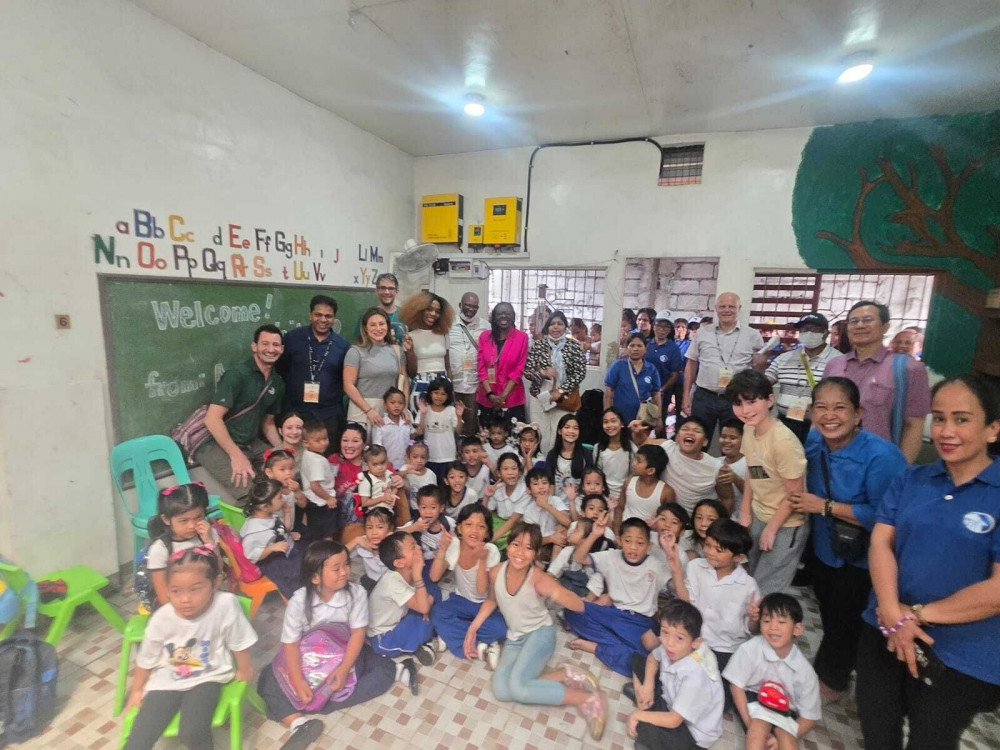
This became concrete when delegates were invited to visit a number of grassroots partner sites working for human rights at the local level. My group was privileged to visit IFI’s Eskweylayan program in Tondo. Tondo is one of the most densely populated and impoverished areas in Southeast Asia, with makeshift housing for an estimated 4,500–5,000 households. Many parents earn a living through informal work such as scavenging, waste-picking, small-scale trading, and some dock work. Food insecurity is so widespread that residents often rely on “pagpag” (recycled leftover food). Access to clean water is severely limited, while hazardous conditions, such as frequent fires, make life even harder on a daily basis.
Yet, in a one-room classroom filled with more than 30 joyous children, the Gospel comes to life. Eskwelayan, a term that translates to “school for awareness and freedom” is a safe space for children to receive an education focused on civil rights, social-emotional learning, and each person’s innate worth and dignity. Here, a community deemed expendable by society comes together every day, led by mothers of this community, to educate its most vulnerable about advocacy, activism, and freedom.
Being in communion with these beloved children is to find these conditions—and the oppressive systems that perpetrate them—intolerable. Just as it would be intolerable for my own children to lack nutritious food or clean water, we must feel outrage when these conditions are deemed "acceptable" for any child. We must sit with the pain of bearing witness, and then let that pain motivate our commitment to protect and love these children and their families the way God calls us to.
Theological Education Beyond Empire
The three areas of focus under the gathering’s main theme of “Breaking the Chains of Injustice” were land, language, and legacy. Dr. Jione Havea, a Tongan theologian, expanded our understanding of language to consider the language of the land, the sea, and all of creation. This sparked a vital conversation about the need for expansive theological language that moves us beyond limited colonial thinking. Dr. Gloria Mapangdol, President and Dean of St. Andrew’s Theological Seminary, reflected on land justice and the “economics of enough.” She encouraged a theology of abundance in which communal sharing is expected and honored. For the final theological reflection, I spoke about the theme of legacy, drawing on Peter’s image of living stones, actively, collectively, and sacrificially building a new, just world, aligning ourselves with Jesus, and thereby the poor and displaced.
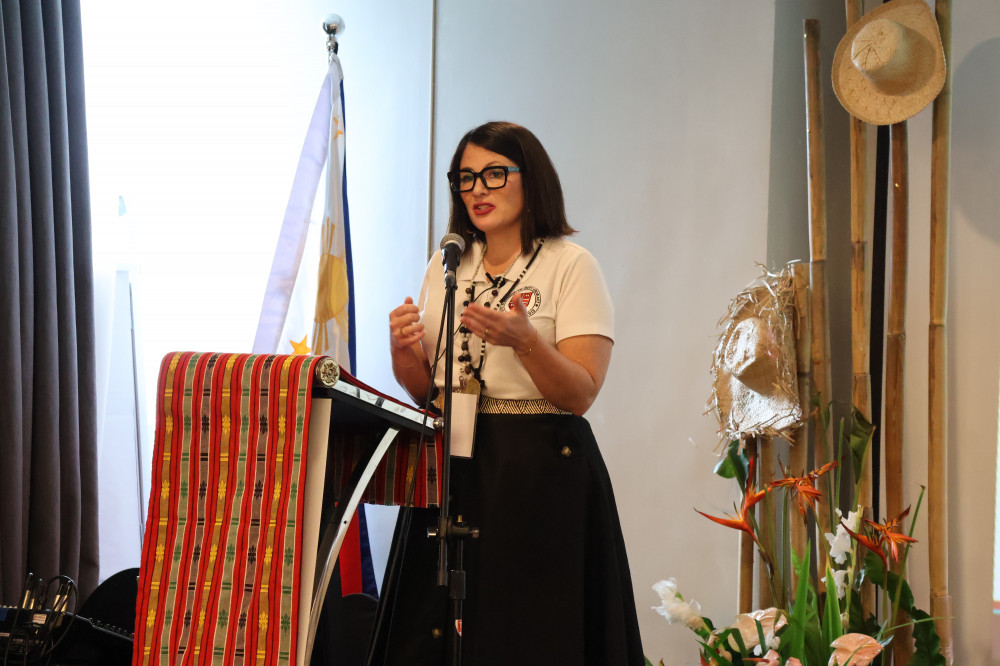
At EDS, we are committed to making theological education "beyond empire" a reality. I am inspired by, and grateful for, the example of USPG, whose commitment to decolonizing theological education involves naming the reality of their own history as well as their hope for the present and future. Those who were once considered “mission fields” are now recognized as the teachers and theologians for the whole Communion.
EDS is committed to supporting emerging scholars and church leaders from historically underrepresented contexts through our ongoing fellows program. We look forward to future partnership with USPG, whose Fellowship of Anglican Scholars of Theology (FeAst) program is “building up Anglican scholars and scholarship marked by creativity, critical-edge, and courage.”
Truth-Telling as a Path to Repair
The work of repair cannot happen without telling the truth about the harm done in our church and communities. We must be honest: The Episcopal Church’s legacy is rooted in slavery, residential Indian boarding schools, and the cultural genocide of Indigenous peoples. We must own the history of enslaving other human beings to build our churches and the subsequent use of racial segregation to preserve wealth and power.
Our legacy also holds the history of those who resisted—organizations like the Episcopal Society for Cultural and Racial Unity (ESCRU) and leaders like Jonathan Daniels and Pauli Murray. We tell the truth not to remain stuck in shame, but to repent and lament so that we might move forward in solidarity. Often, this healing work begins with listening. EDS is committed to creating and hosting spaces for the Church to wrestle with the realities of our past and our potential for the future so that we might find liberation and healing.
Aligning Our Resources
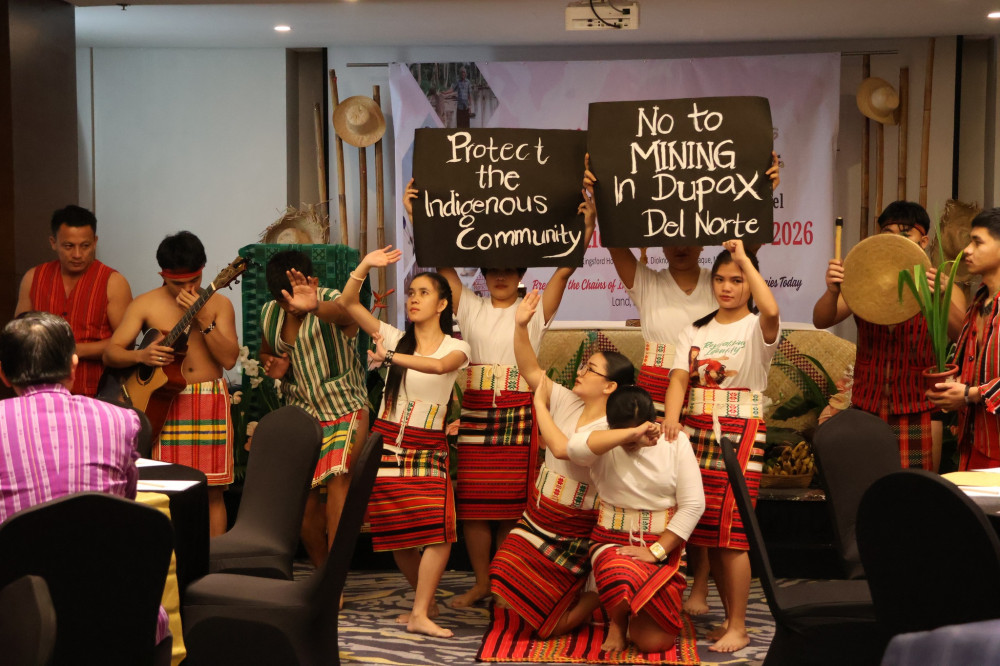
The communiqué also calls the Church to review its investments and landholdings. Since EDS is blessed with a sizable endowment, we take this responsibility seriously. We have divested from fossil fuels and maintain a 50% Socially Responsible Investing (SRI) commitment. Our investment committee engages in this conversation at every meeting, ensuring our financial stewardship is built on a foundation of integrity and remains aligned with our mission.
Our Commitment Going Forward
Theological education at its core is a deep exploration of God’s presence, God’s love, and God’s unwavering demand for peace, justice, and the thriving of all creation.
We look forward to deepening our relationships with USPG and the global leaders and organizations represented at this consultation. EDS is committed to forming leaders of faith rooted in the liberative love of Jesus—leaders who are eager to learn from, work alongside, and resource those who have been doing this transformative work at great risk. I was honored to build community alongside these inspiring leaders, and I am eager to strengthen these bonds as we live into God’s dream together.